Creator economy · OnlyFans
OnlyFans: Annie Knight reveals the 80% of her work nobody sees
We picture an OnlyFans star alone in front of a camera. Annie Knight describes almost the opposite: 20% visible content creation and 80% editing, marketing, data, tax and management. Twelve people work around her account across Australia, the United States and the United Kingdom.
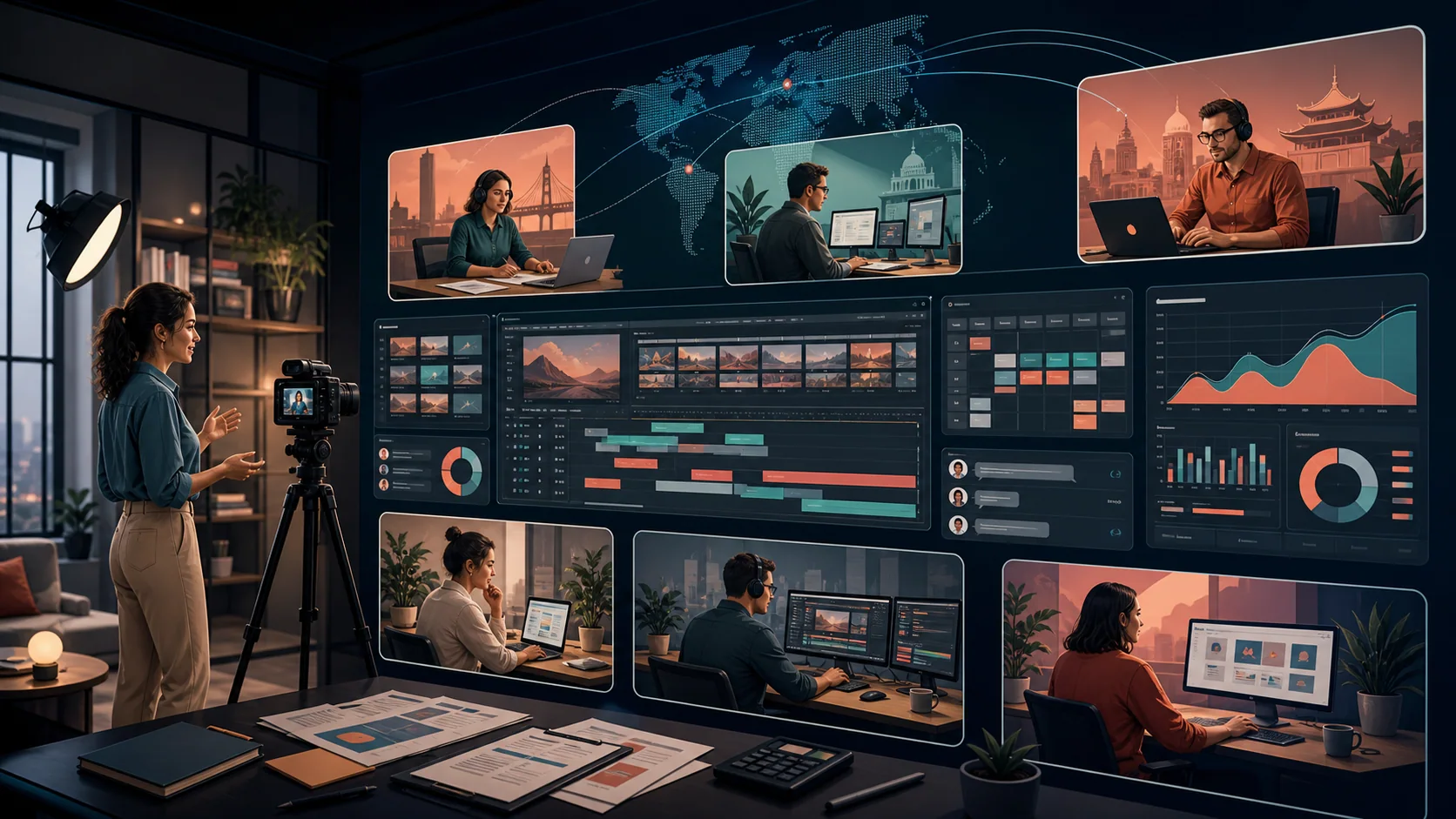
The figure that changes the image of OnlyFans: 20%
The camera is the most visible part of Annie Knight's business, but not the biggest. In a report published by News.com.au on August 27, 2026, the Australian creator estimated that filming adult content or footage for social media accounts for around 20% of her workload.
The remaining 80% is behind-the-scenes work. Knight cites editing, data analysis to understand what converts a viewer into a paying customer, financial management, tax and the day-to-day running of her business. The split is her estimate, not the result of an independent time study.
Yet the ratio says something broader than her individual case. For a major account, producing a video is only one step. It still has to be repurposed and distributed, its performance measured, payments managed and the people who keep the operation running coordinated.
Behind one account, a 12-person team
Knight says 12 people now work around her business across Australia, the United States and the United Kingdom. The source describes a mix of full-time team members and independent contractors. Calling them 12 employees would therefore be inaccurate.
The roles resemble those at a small media company: personal assistance, podcast production, editing, public relations and social media strategy. Knight says she works with three assistants whose responsibilities differ, covering YouTube and OFTV, video editing and the management of other creator platforms.
This operation did not appear overnight. She says she handled everything herself until 2022, when the volume of administration and editing began preventing her from focusing on directly revenue-generating tasks. Hiring her first assistant marked the start of delegation.
Instagram and TikTok are shop windows for the paid account
The most revealing role is that of the “clipper”, an editor who cuts an interview, podcast or long video into short clips. According to Knight, her lead editor lives in the United States and distributes these excerpts across around 20 Instagram and TikTok accounts.
The platform that collects the subscription fee is not necessarily where the sale begins. Instagram, TikTok and YouTube provide free attention; short-form content then funnels part of that audience towards a paid space.
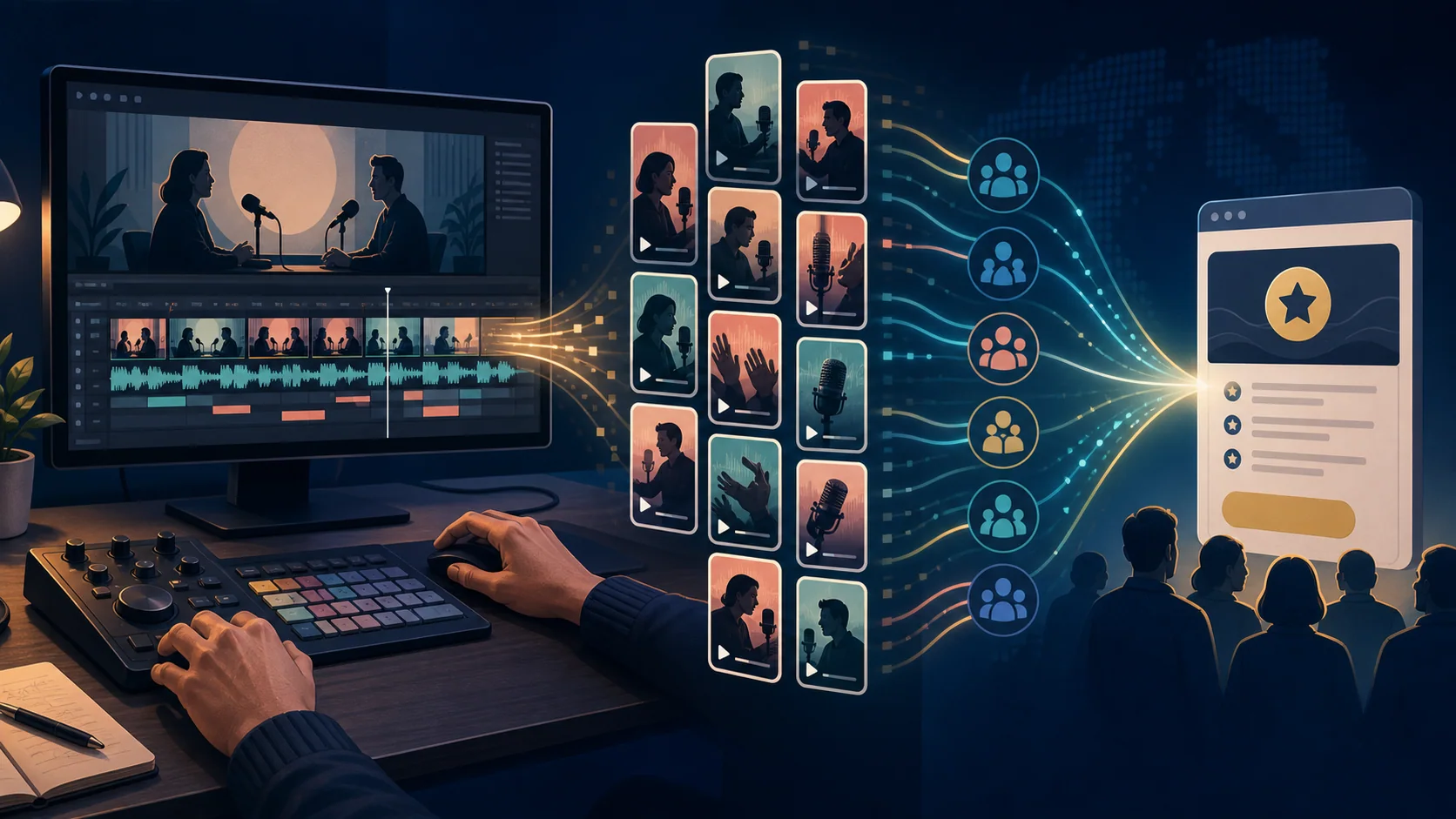
Knight describes a different grammar for each network: a more polished image on Instagram, more direct speaking on TikTok and longer narratives on YouTube. The same underlying business is adapted to the behaviour expected on each platform.
Why her business targets the United States first
The team is not spread across three countries by chance. Knight describes the United States as her main market and believes American subscribers are more willing to pay than Australian audiences. That is her assessment; it does not support a general conclusion about all consumers.
It nevertheless explains a very concrete decision: placing part of the editorial chain close to the target market. A US-based editor can identify the references, posting times and formats most likely to circulate among that audience.
An Australian creator's account thus operates like a small digital export business. Production can take place on the Gold Coast, be edited in the United States, administered with British team members and then sold to subscribers scattered around the world.
Twelve people, but what are their working arrangements?
The word “team” does not reveal the employment status of everyone involved. The report mentions full-time roles and independent contractors. Knight explains that some editors receive a monthly retainer, while administrative tasks are paid by the hour.
That detail matters because the number of people involved does not necessarily equal an employee headcount in accounting terms. It is better understood as the regular working network behind a personal brand.
In an August 11 interview with The Smallzy Show, Knight had already confirmed a 12-person team and stressed the invoices, tax and payroll involved in a business that, according to her, generates six figures in monthly revenue. The 20/80 figure published later offers a clearer measure of how much space these tasks occupy.
Does the end of major stunts open a new phase?
On August 26, Us Weekly detailed a shift that was already under way. Knight said she no longer wanted to organise extreme stunts solely to attract media attention. She remained open to initiatives she viewed as educational, particularly around consent or sexual health.
This was not an overnight reversal. In June, the magazine had already reported that she had largely stepped away from such stunts; in July, Knight said she had decided not to repeat the biggest ones. OnlyFans also reminded Us Weekly that “extreme challenge” content is not permitted under its rules.
Nothing proves that this decision stems from the scale her business has reached. The juxtaposition nevertheless suggests a hypothesis: a business with an international team and a permanent acquisition engine may depend less on a single publicity stunt to find new subscribers.
Sex drives clicks, but the business model lies elsewhere. In the operation Annie Knight describes, 80% of the work happens in spreadsheets, editing software, publishing calendars and team management. The personal account visible to subscribers has become the shopfront of a small global content company.
Աղբյուրներ
- News.com.au — Annie Knight details the business strategy behind her OnlyFans success
- Us Weekly — Annie Knight says she is done with publicity-only stunts
- Us Weekly — Annie Knight recalls ending her biggest stunts
- The Smallzy Show / iHeart — Interview: Annie Knight
- Sydney Today — accessible syndication of the News.com.au report